Edogawa Craft Stories

Edogawa Methi: A Taste of Home for India Becomes a New Brand Vegetable Fostering Cultural Exchange
When it comes to Edogawa City’s signature vegetables, komatsuna comes to mind first. But in one corner of a komatsuna farm in the city, cultivation has now begun for methi, a legume commonly eaten in everyday cooking in countries such as India and Nepal.
In Edogawa City—home to Japan’s largest Indian community, with 8,036 Indian residents (as of September 1, 2025)—this methi-growing initiative began with a simple wish: “We want to bring the taste of home to the Indian people living here.” Today, it has grown into a challenge to establish methi as a symbol of multicultural coexistence and a second brand vegetable alongside komatsuna. This report looks at the work of the Edogawa-Methi Promotion Circle, which is using methi to nurture a new community that crosses nationalities.
The Challenge of Growing an Everyday Indian Vegetable in Edogawa City
With its charming leaves that resemble a four-leaf clover, methi is a familiar vegetable on tables in India and Nepal, known for its crisp texture and distinctive slight bitterness. When stir-fried in oil, it releases a sweet aroma reminiscent of maple syrup, and its refreshing flavor—rich in savory components—adds depth to dishes.
The group that launched this effort to grow methi in Edogawa City is the Edogawa-Methi Promotion Circle. It is run mainly by five graduates of the Edogawa University of Life and Life Studies, a program the city established as a place for people to learn while aiming to contribute to their community.
The spark came from a casual chat between the group’s representative, Takehara Kiyomi, and Professor Indira Bhatt, an India-born instructor at the university.
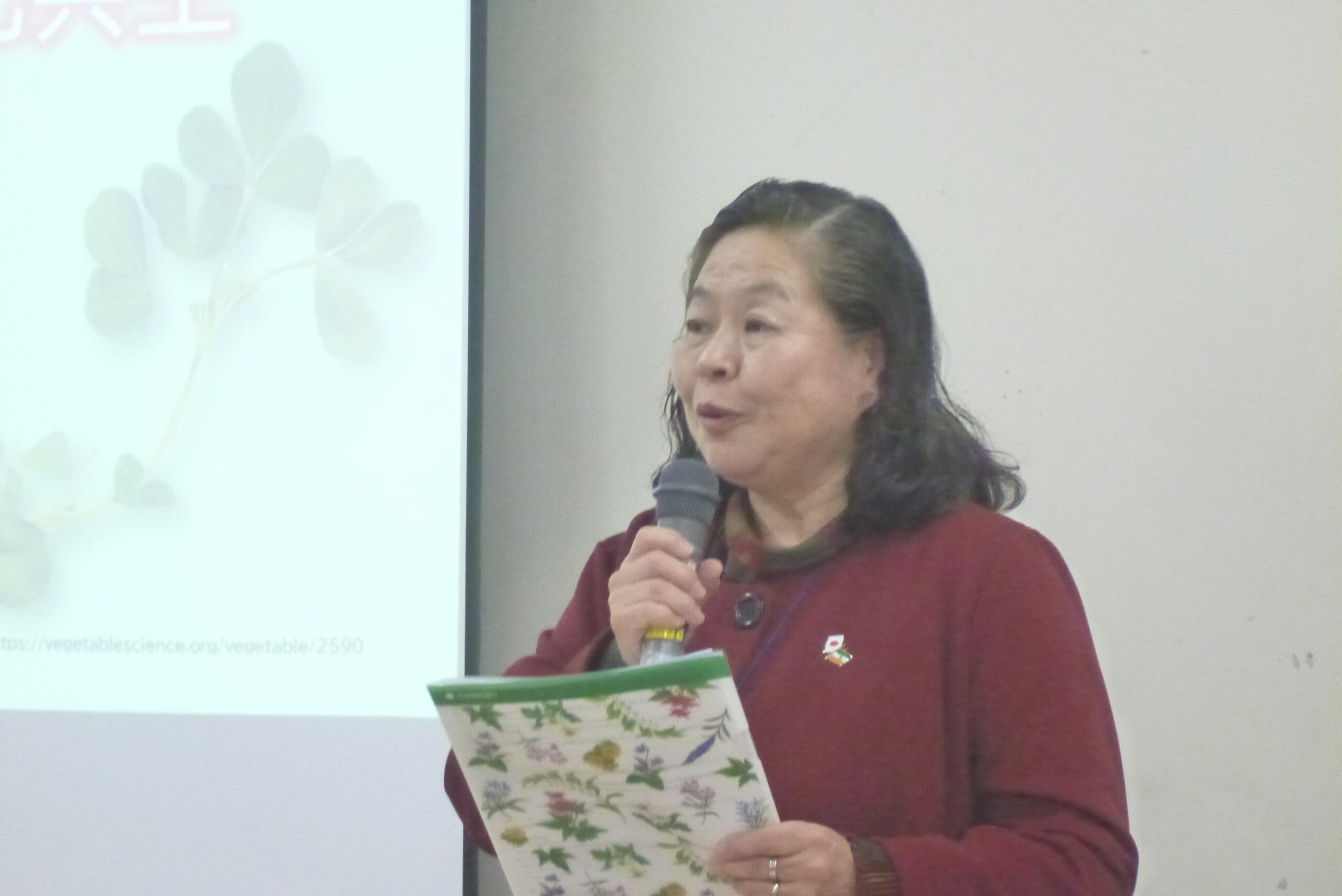
Takehara Kiyomi, the representative, speaking about how the Edogawa-Methi Promotion Circle was formed at a report meeting on methi research results. Courtesy of the Edogawa-Methi Promotion Circle
“Professor Bhatt casually said, ‘Indians love a vegetable called methi, but it’s hard to get in Japan. There are lots of vinyl greenhouses in Edogawa City—could someone grow it somewhere?’ Because I’ve lived overseas myself, I understand how hard it is not to be able to eat the tastes of home. I thought it must be painful if it simply isn’t available,” Takehara says.
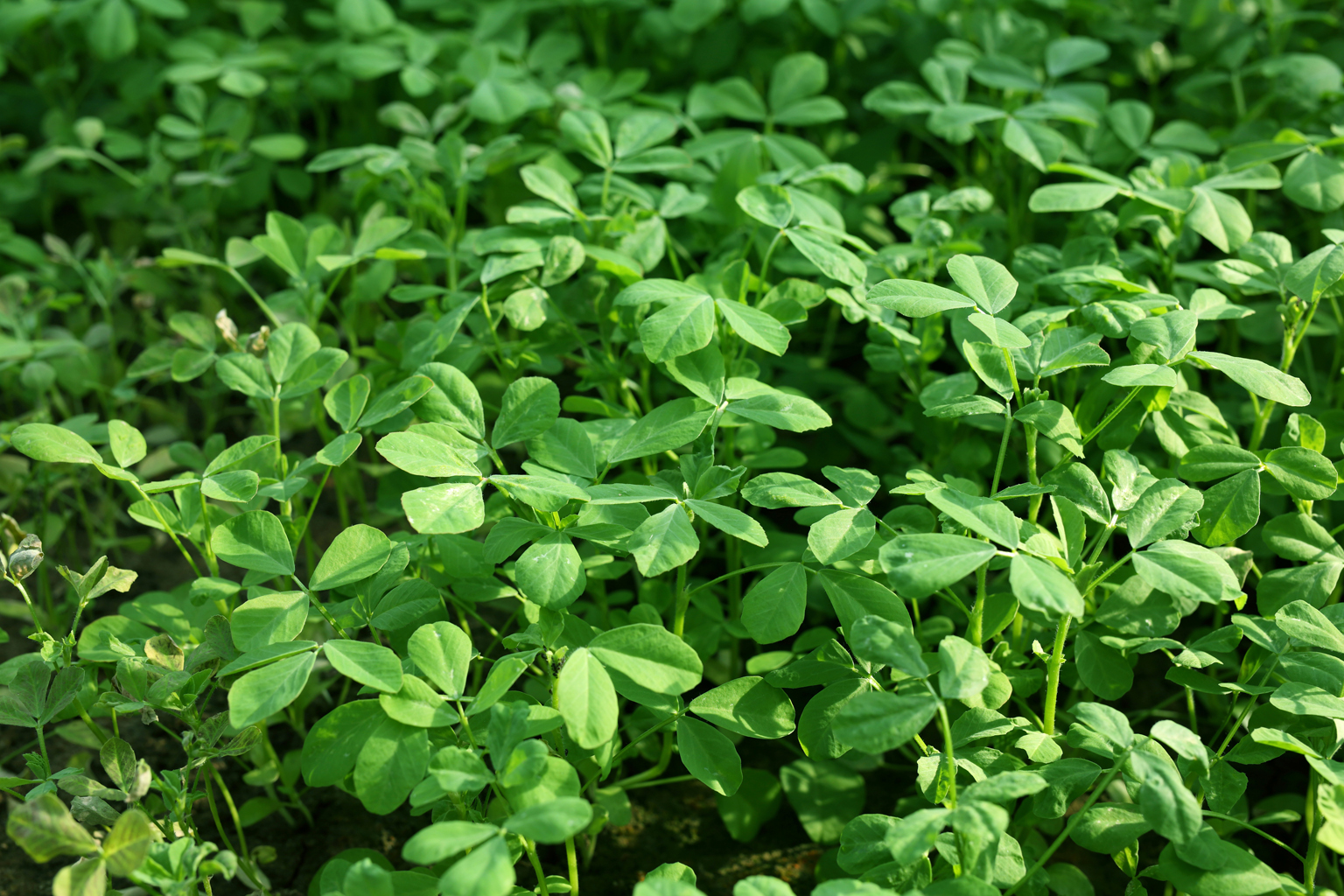
Fresh methi is an everyday staple in home cooking in places like India and Nepal. “In India, methi seems to be used in cooking about as often as green onions are for Japanese people,” Takehara says.
If a farmer could grow it even at the edge of a field, Professor Bhatt and others might be happy—starting with that light, hopeful idea, Takehara began asking farmers she knew. But the barrier was higher than she had imagined. One after another, she was turned down: “We can’t sow seeds of an unknown vegetable in our valuable fields.” Still, she didn’t give up, and spent more than a year searching for someone willing to try. In the end, a JA (Japan Agricultural Cooperatives) representative who understood the idea offered to introduce a komatsuna farmer.
“At that time, the farmer told me, ‘Farmers make their living by growing vegetables. If you’re going to involve professionals, don’t quit halfway—do this with the commitment it deserves.’ Hearing that really sobered me up. If we were going to ask, it had to benefit the farmer too,” she says.
Two years after that first conversation with Professor Bhatt, methi cultivation in Edogawa City finally began—in the spring of 2018.
Cultivation Begins With Help From Komatsuna Farmers, But the Trial and Error Continues
The first farmer to take on methi cultivation was a komatsuna grower in Shinozaki. Even so, it didn’t go smoothly right away. No one knew how to grow methi seeds—also known worldwide as the spice fenugreek.
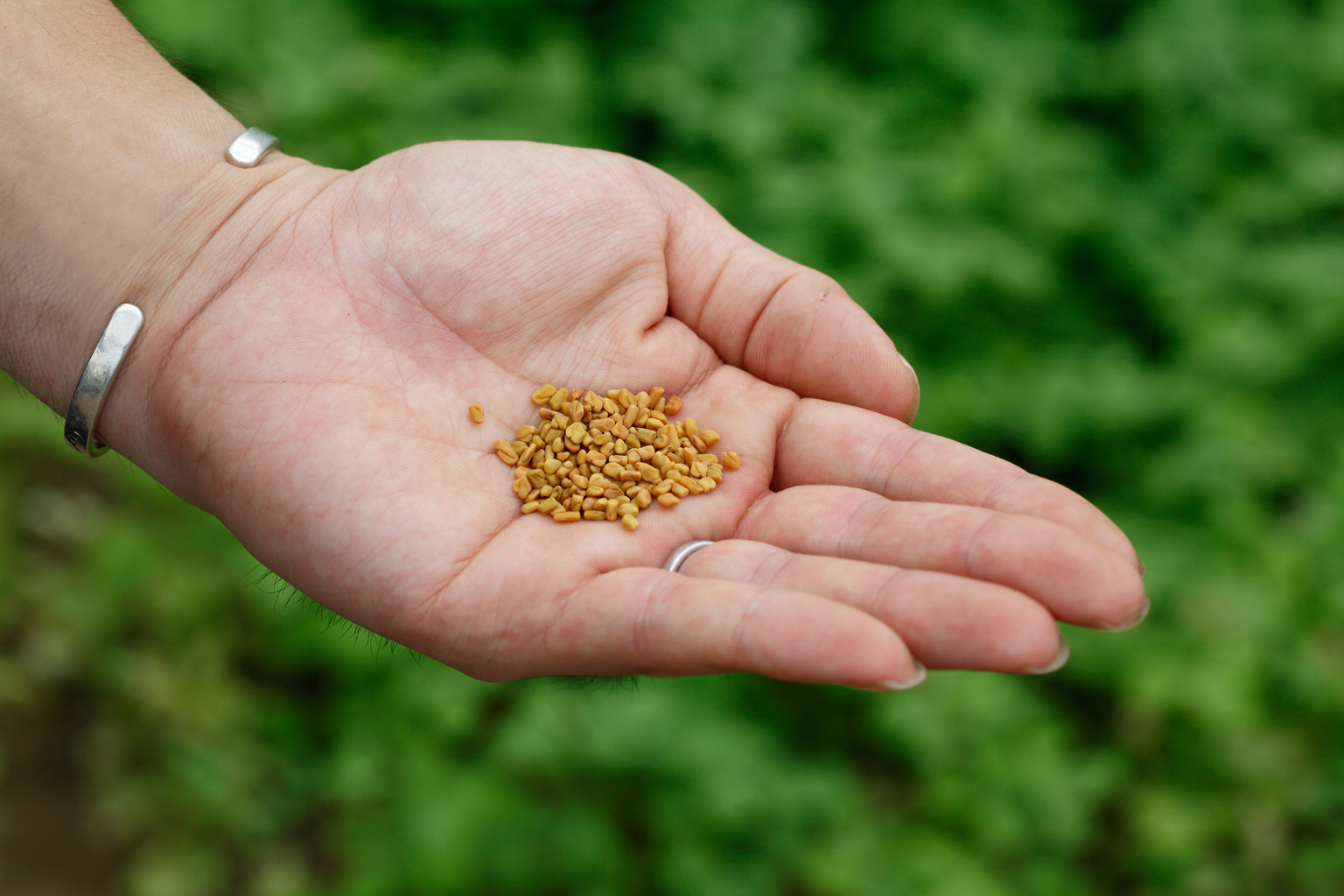
Methi seeds. When dried, they are used around the world as the spice “fenugreek,” for adding flavor to dishes such as curry and stir-fries.
While also seeking advice from Professor Bhatt and the Tokyo Metropolitan Agriculture and Forestry Research Center, Edogawa Branch, the circle’s members and the farmer worked together and moved forward through hands-on trial and error.
“Methi is a winter vegetable in India, and it prefers temperatures of around 15–25°C (59–77°F). It’s weak in the heat, so it can’t be grown from July to September. But in spring and fall, if you grow it in a greenhouse, it takes about 30 days from sowing to harvest. In winter, when growth slows, it takes about 60 days. When we reached our first harvest in late April 2018, we held a tasting event at a restaurant run by the family of Jagmohan Chandrani, the president of the Indian Community of Edogawa.”
The reaction to the methi dishes served to about 20 guests, both Indian and Japanese, went beyond Takehara Kiyomi’s expectations.
“From the Indian guests, we heard joyful comments like, ‘We can enjoy the taste of home in Japan.’ And the Japanese guests also loved it, saying how delicious it was and how interesting the vegetable is. This was the moment I became convinced that methi could catch on not only with Indians, but with Japanese people too, and spread more widely.”
Encouraged by that response, Takehara and the members she had been working with founded the Edogawa-Methi Promotion Circle. They resolved to promote methi not only to Indian residents, but to Japanese residents as well.
Their next priority was increasing the number of farmers willing to grow it. As they focused their efforts, the number of cooperating farms in Edogawa City grew to five (as of December 2025)—all of them komatsuna growers, from the city’s birthplace vegetable. “For komatsuna farmers, methi may have felt relatively approachable, since it’s also a leafy green,” Takehara says.
Among those five farms, the newest member is Ishizuka Farm, run by Ishizuka Hiroki. As a third-generation komatsuna farmer, he was just beginning to focus fully on farming when a JA representative brought him the idea of growing methi.
.jpg)
Looking back, Ishizuka says, “When I heard it was a new vegetable that still hadn’t spread widely, I got excited.” The lush methi in the greenhouse was grown by Ishizuka.
“It was a time when I was taking over from my father, and I wanted to try something different from the komatsuna we’ve been growing for years,” Ishizuka says. “But everything was new—how far apart to sow the seeds, how to deal with insects—so there was much you could only learn by doing. I kept experimenting, consulting the circle and more experienced farmers, and little by little I started to understand methi’s quirks.”
Recognition Grows Through a TV Broadcast, Aiming for a “Taste of Home” from Edogawa City
After actually growing methi, Ishizuka says he felt how well it fit alongside komatsuna.
“Komatsuna, our main crop, is also in season in winter, so the growing periods overlap, and that’s a challenge. But even if you plant methi and komatsuna side by side, they don’t get in each other’s way. Methi seems to be a fairly hardy vegetable—it grows well right out to the edges of the field.”
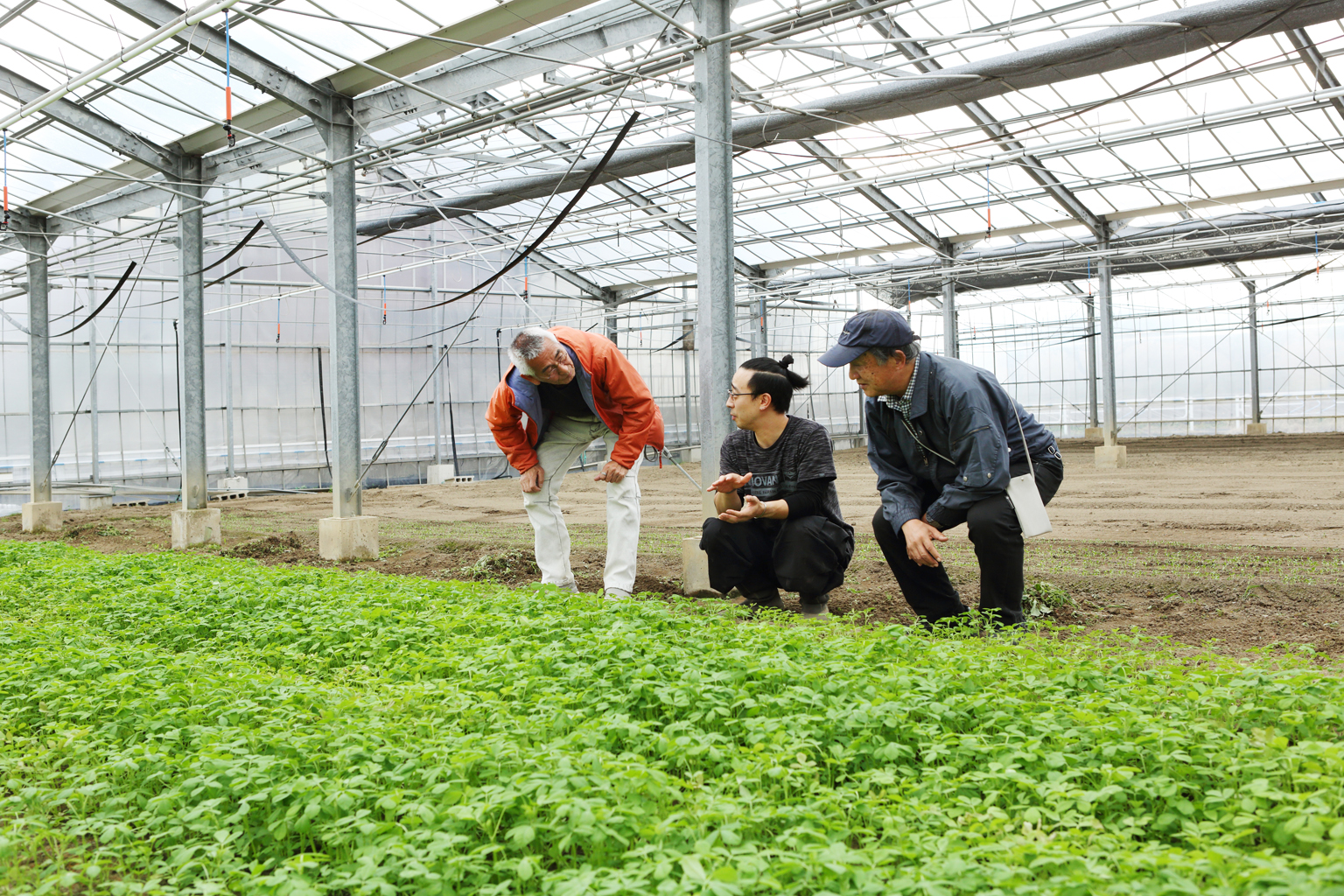
Watching over the methi on either side of Ishizuka (center) are Kumakura Ichiro (right) and Kobayashi Hiroshi (left) from the Edogawa-Methi Promotion Circle. From delivering seeds to preparing shipments of grown methi to Indian grocery stores—and even handling delivery—they have worked alongside Ishizuka to promote it.
For Ishizuka, a major boost came from an NHK informational program that aired in November 2023. The show featured the Edogawa-Methi Promotion Circle, including a scene where the owner of a Nepalese restaurant in the city spoke while holding fresh methi.
“He was overjoyed, saying, ‘This is a vegetable from home—it tastes like my late mother’s cooking.’ Hearing that, I really felt how needed this vegetable is. It made me think: we have to keep growing it. And because there are still so few growers, I want to build up the know-how now and work hard to become a leading methi grower.”
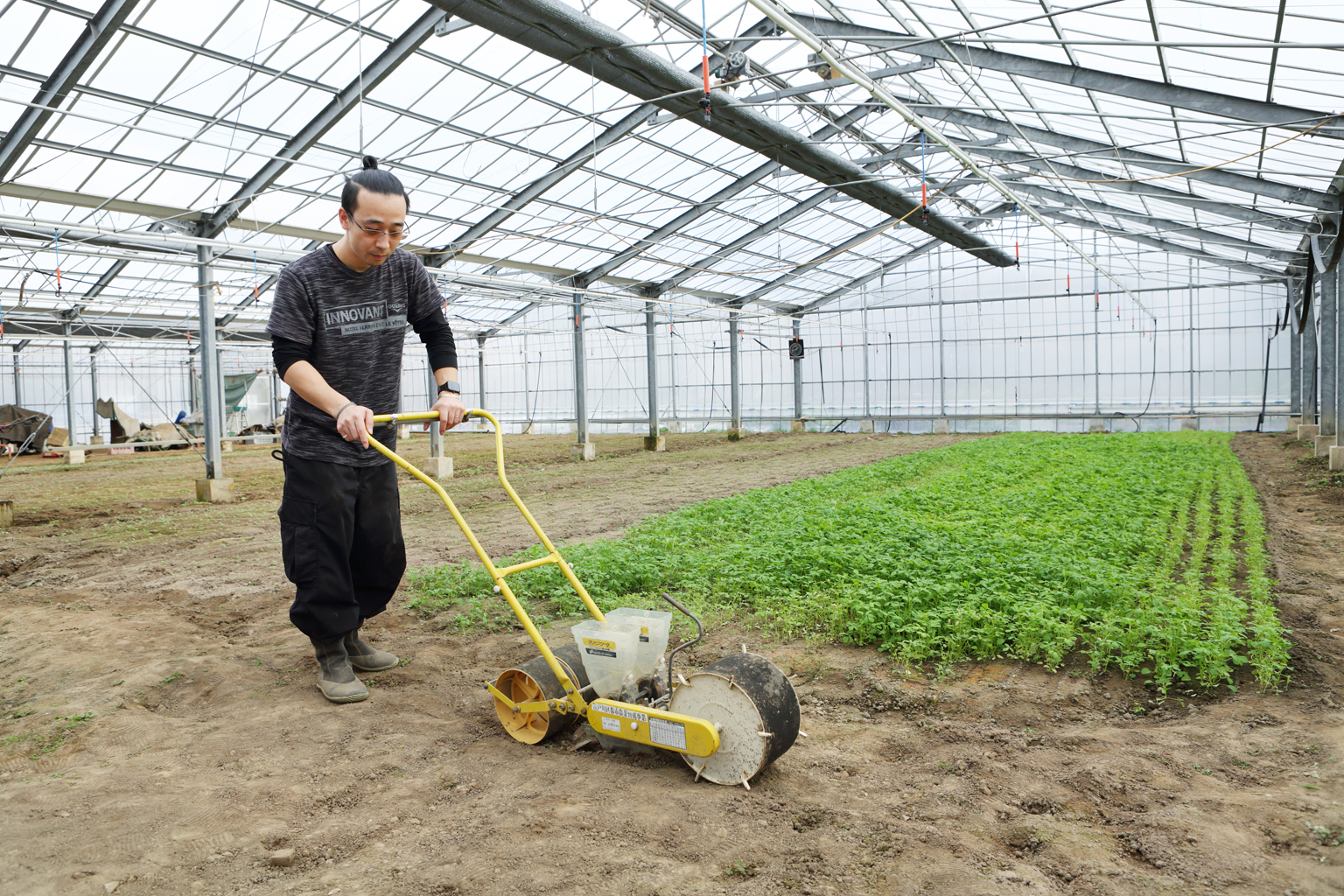
After learning that methi differs from komatsuna in both seed size and the spacing needed for sowing, Ishizuka prepared a dedicated seeding machine for methi. “I want to work with the circle to stabilize both demand and supply,” he says.
Looking back, Takehara says this broadcast greatly expanded awareness of Edogawa-grown methi. In the early days, sales were mainly through Indian grocery stores in the city that support the tables of Indian residents in Japan. Now, methi is spreading within Edogawa City as well, appearing on menus at local cafes and being sold as a local vegetable at supermarkets.
“One Indian person who ate Edogawa-grown methi told us, ‘Methi back home is more bitter. Japanese methi has a milder bitterness and tastes great. Kids can eat this.’”
Ishizuka suspects that Edogawa City’s climate and soil may be giving the flavor its own distinct character. In this way, the Edogawa-Methi Promotion Circle’s work has helped methi take root across the city.
Toward A New Approach to “Multicultural Coexistence”
Takehara Kiyomi, the representative of the Edogawa-Methi Promotion Circle, smiles as she says the group’s work is showing growth that goes beyond simply “promoting an Indian vegetable.”
“Professor Aoki Yoko of the Faculty of International Studies at Bunkyo University, who has been conducting joint research with us focused on Edogawa-grown methi, has praised our activities as ‘a new approach to multicultural coexistence, in which it’s not foreigners living in clusters adapting to local culture, but rather local residents on the majority side who take foreigners’ comfort food (the taste of home, a nostalgic taste) and work to domestic-produce it and promote it.’”
In January 2024, the circle and Bunkyo University jointly conducted a sensory evaluation of methi’s taste. Three dishes—cookies, boiled dumplings, and curry—were prepared in four patterns: “methi only,” “komatsuna only,” “methi and komatsuna,” and “neither included,” and participants were asked to taste and compare them. The result: dishes containing both methi and komatsuna received the highest “delicious” ratings. It confirmed that methi and Edogawa City’s brand vegetable, komatsuna, have a complementary effect that brings out the best in each other.
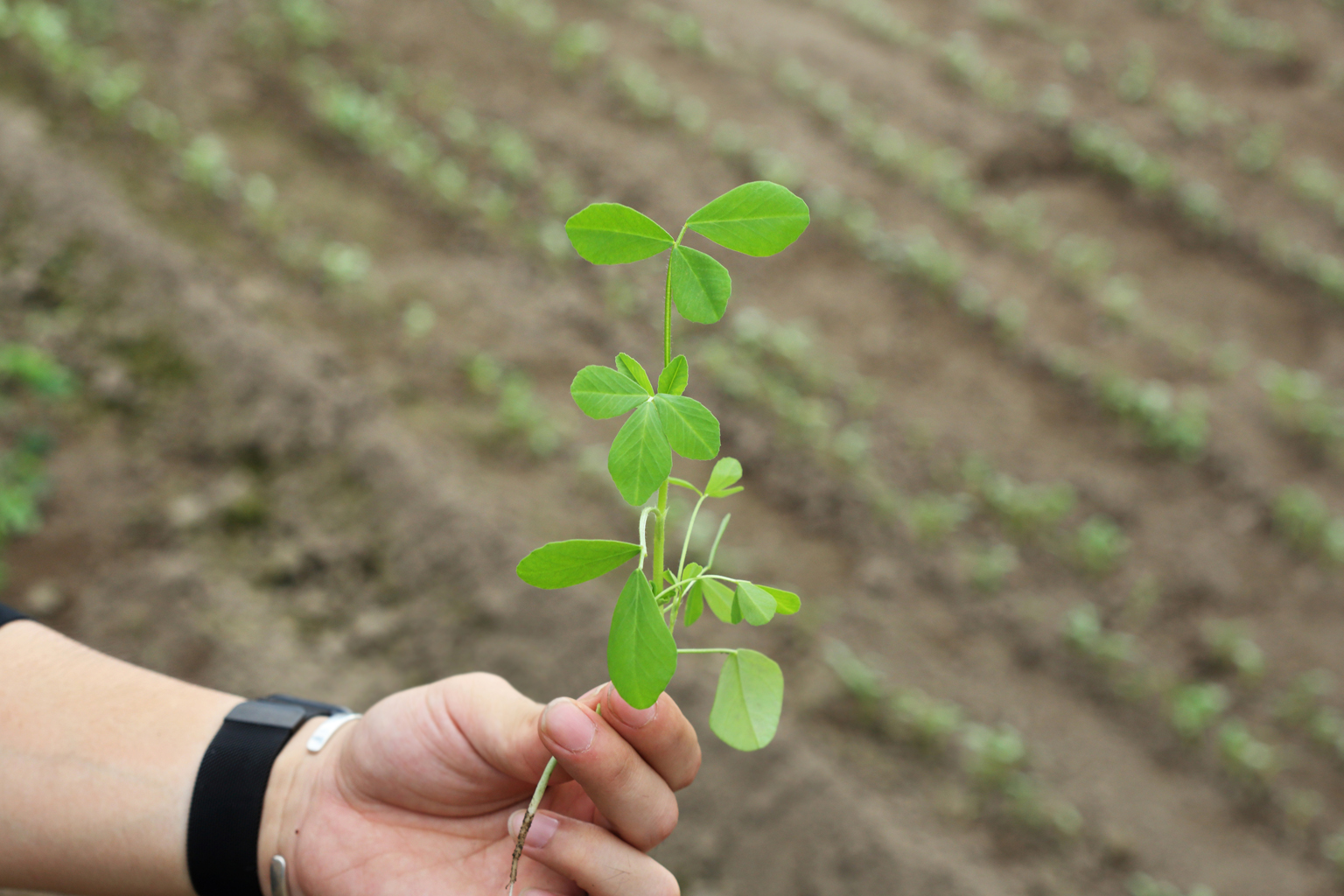
Methi at harvest time. It has a crisp bite similar to pea shoots, along with its own distinctive bitterness.
These efforts in multicultural coexistence have also been recognized. In February 2024, the Edogawa-Methi Promotion Circle received a group award in the Ministry of Internal Affairs and Communications’ Hometown Development Grand Prize, praised as “a unique initiative that incorporates the perspectives of Indian residents in Japan for multicultural coexistence.” Takehara says it is precisely because this is Edogawa City that the initiative could become reality.
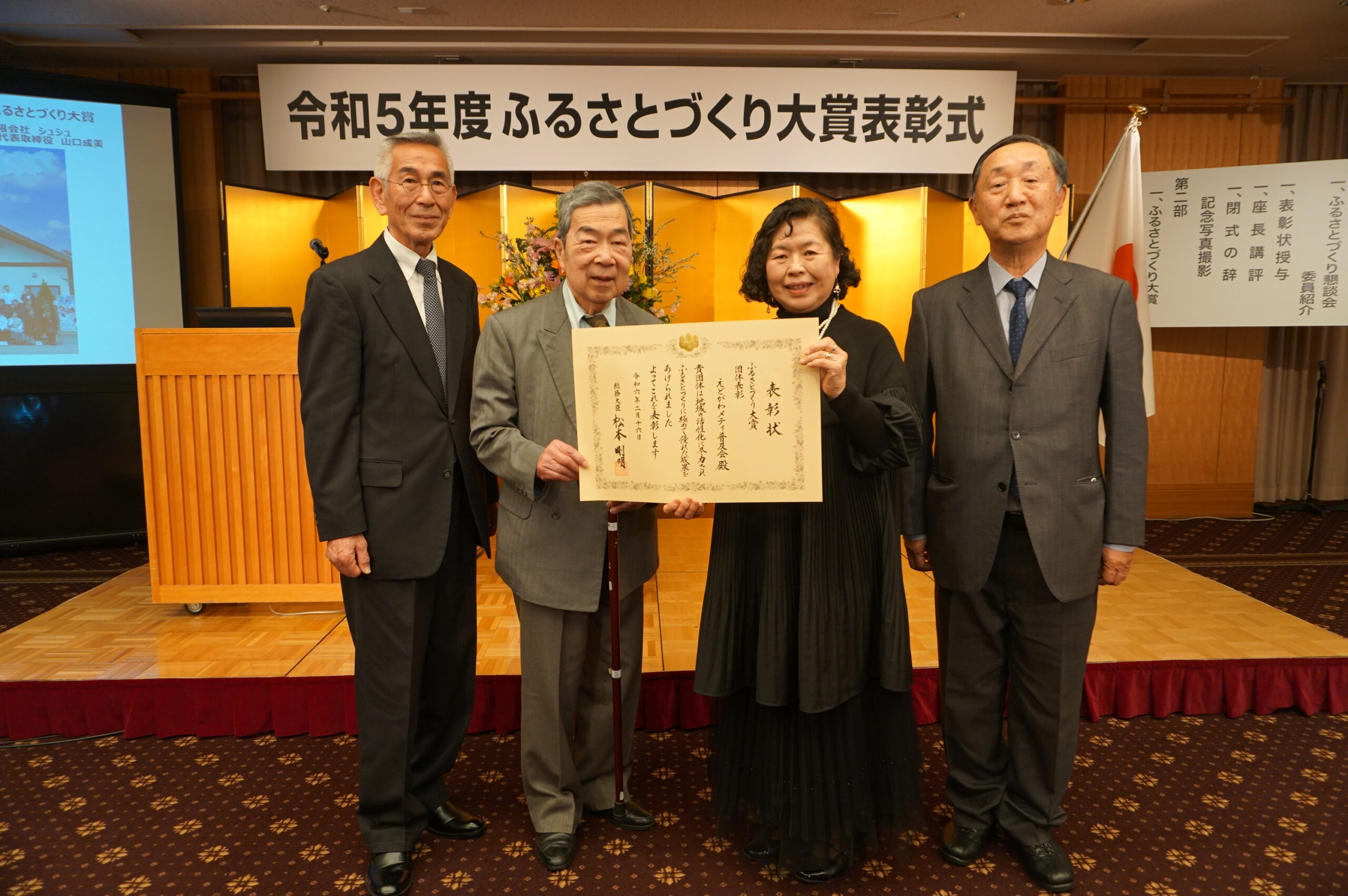
The Edogawa-Methi Promotion Circle received a group award at the Ministry of Internal Affairs and Communications’ Hometown Development Grand Prize. The award defines “hometown” as a place each person feels close to at heart, and honors groups and individuals working across Japan to make their hometown better.
“Edogawa City has a market of more than 8,000 people with roots in India, and at the same time, it has so many people engaged in agriculture that it boasts the highest agricultural output value among Tokyo’s 23 cities, as the birthplace of komatsuna. The way those two factors have fit together is what has supported our activities.”
Going forward, the circle’s goal is to raise the value of methi so that, under the name “Edogawa methi,” it can become a local brand vegetable alongside komatsuna.
They are also exploring new ways of enjoying methi that have emerged in Japan, such as distributing methi recipes for Japanese audiences developed by students at Aikoku Gakuen Junior College at events; holding cooking classes run by circle members featuring methi; and offering tastings of tea made from methi stems. Takehara describes the group’s outlook as follows:
“I was born and raised in Edogawa City. Whether our members are locals or not, they’ve carried out these activities with a love for Edogawa City and a desire to do something for the community. For Indian people, methi today is a ‘taste of home.’ But going forward, as a new local vegetable, it could also become a ‘comfort food’ for people living in Edogawa City. What we learned at Edogawa University of Life and Life Studies was that ‘community building is about building people.’ Through methi, diverse people connect, and a community forms where cultural exchange emerges in Edogawa City. With that possibility in mind, we’ll continue our promotion efforts.”
Sparked by a single voice, Edogawa methi has brought together farmers, Indian people, students, and local residents. This challenge, now taking new root in komatsuna country, is lighting the way toward an Edogawa City future that turns diversity into strength.
Introduction of the Artisan
Founded mainly by graduates of Edogawa University of Life and Life Studies, based on the philosophy of wanting to share from Edogawa City a new community and culture beyond boundaries of nationality, age, gender, and profession through methi, an everyday vegetable in India. By partnering with komatsuna farmers in Edogawa City to cultivate and promote methi, the group works on multicultural coexistence and local revitalization.
・Edogawa-Methi Promotion Circle